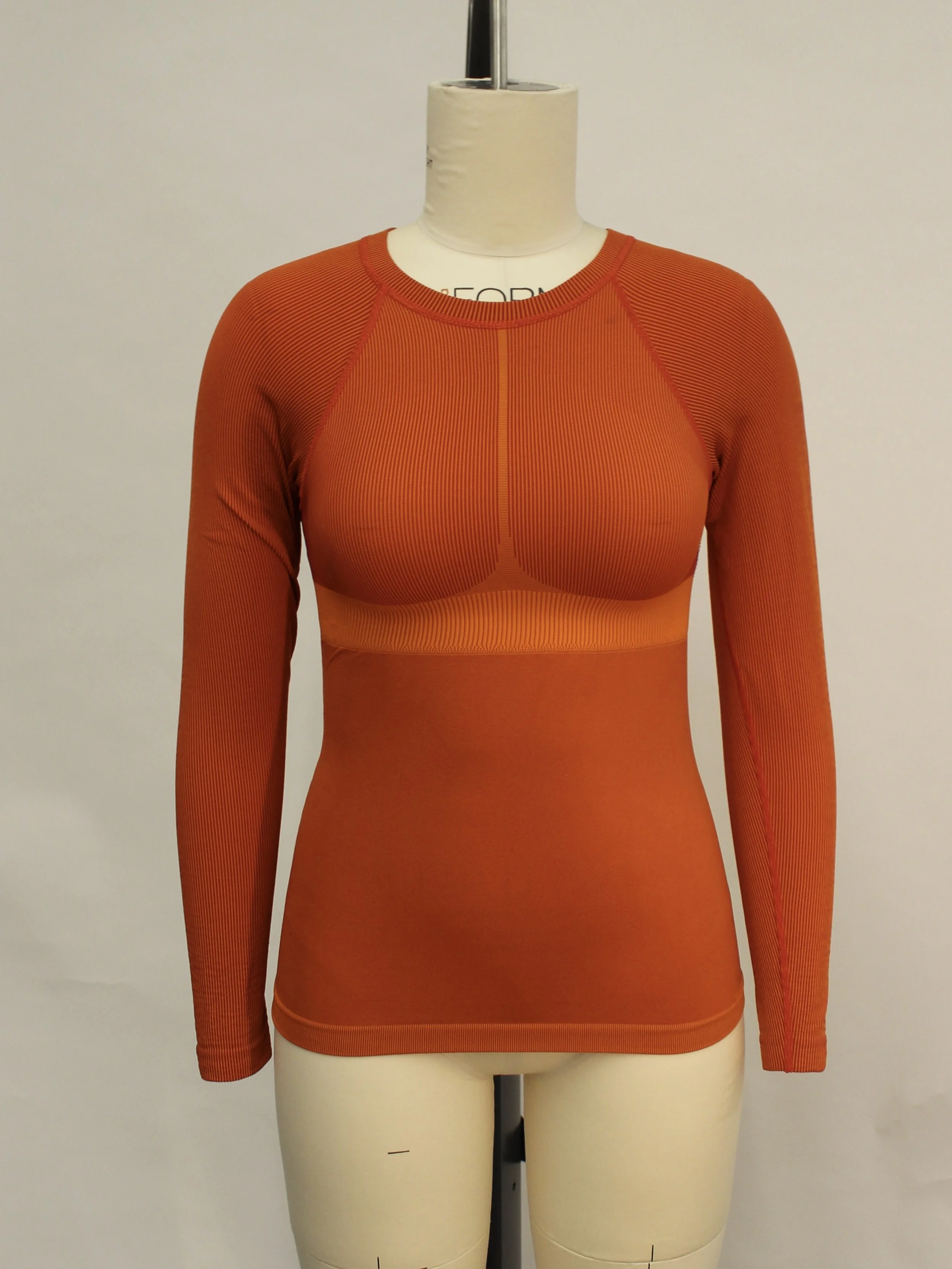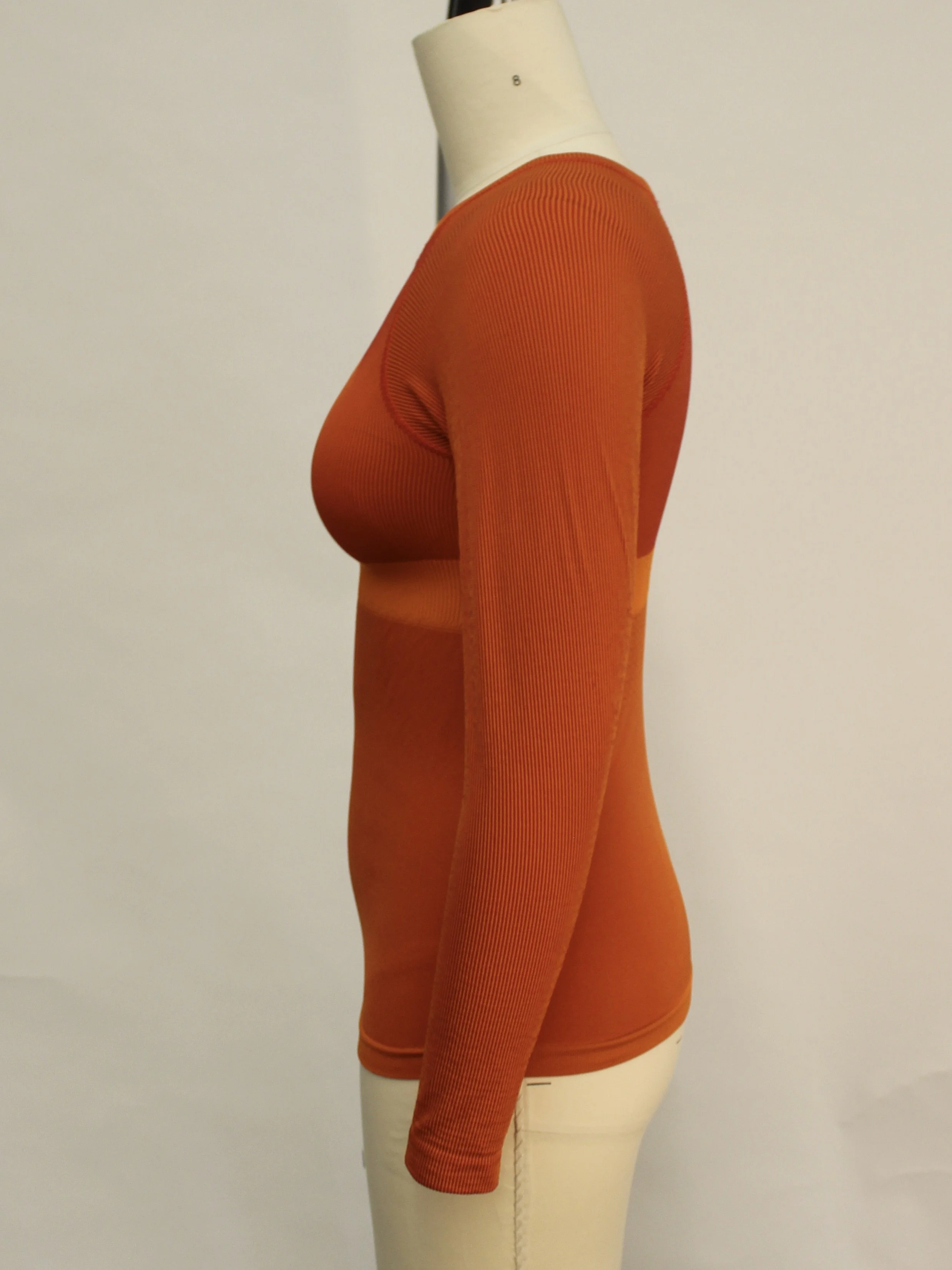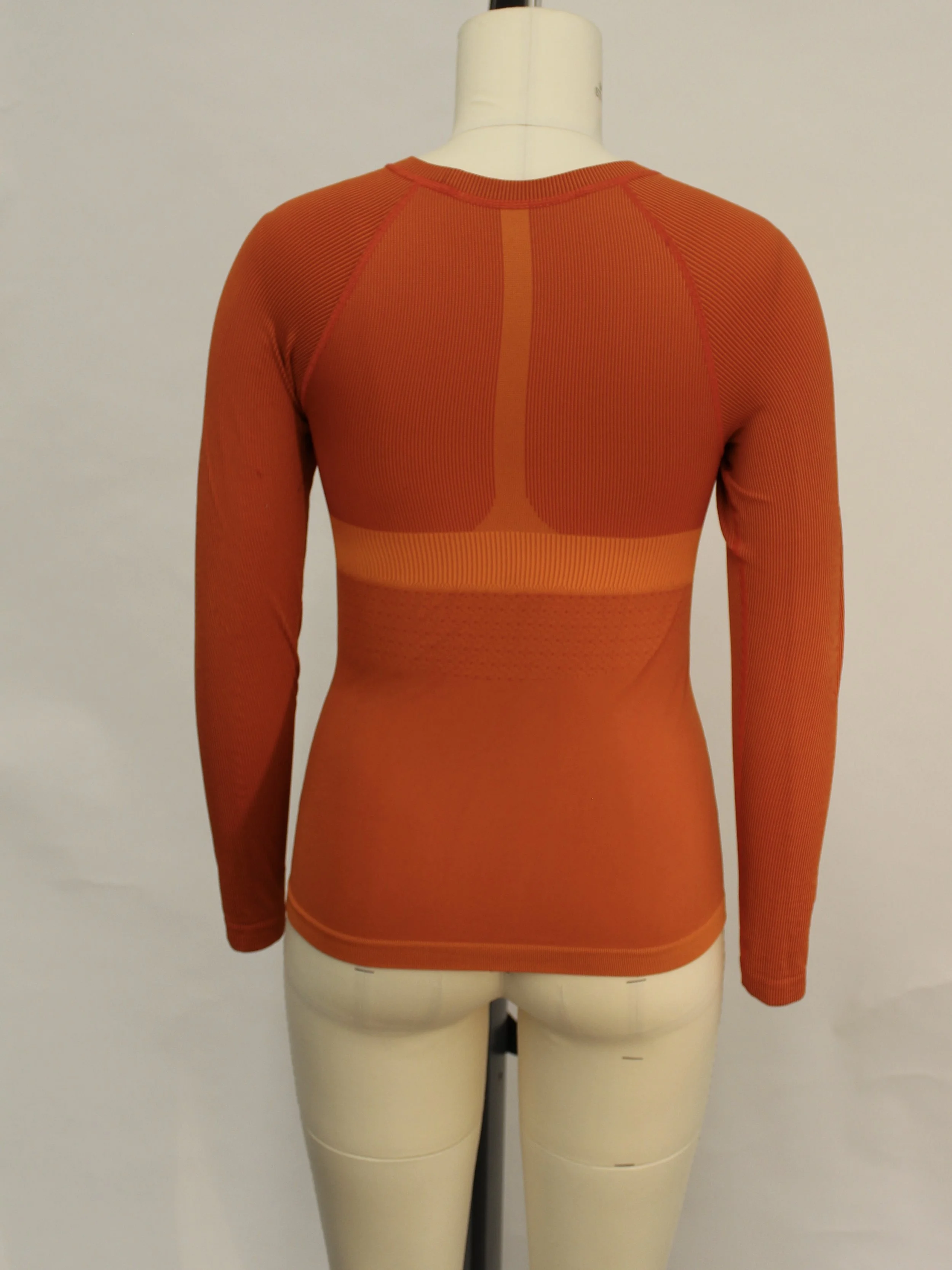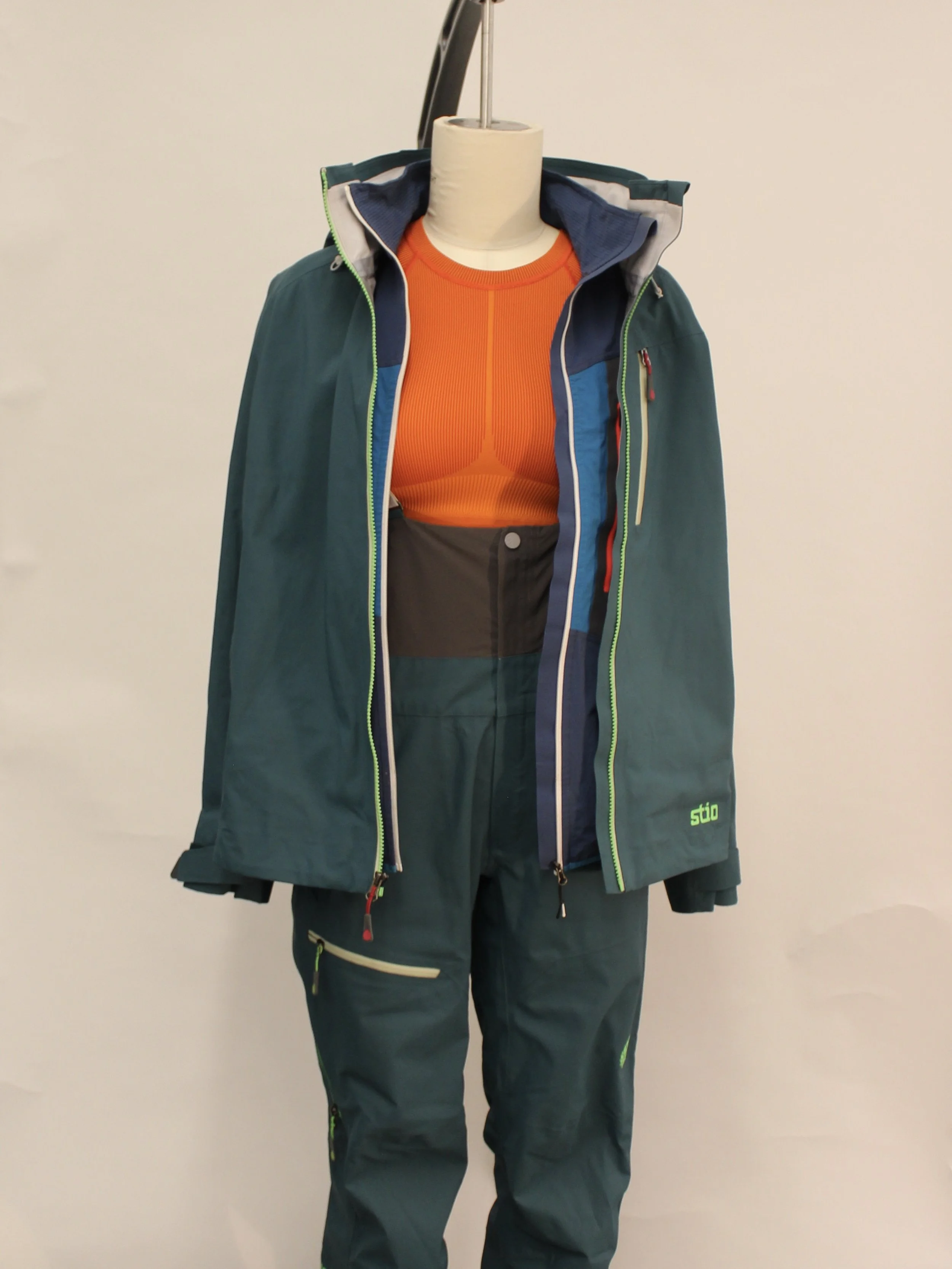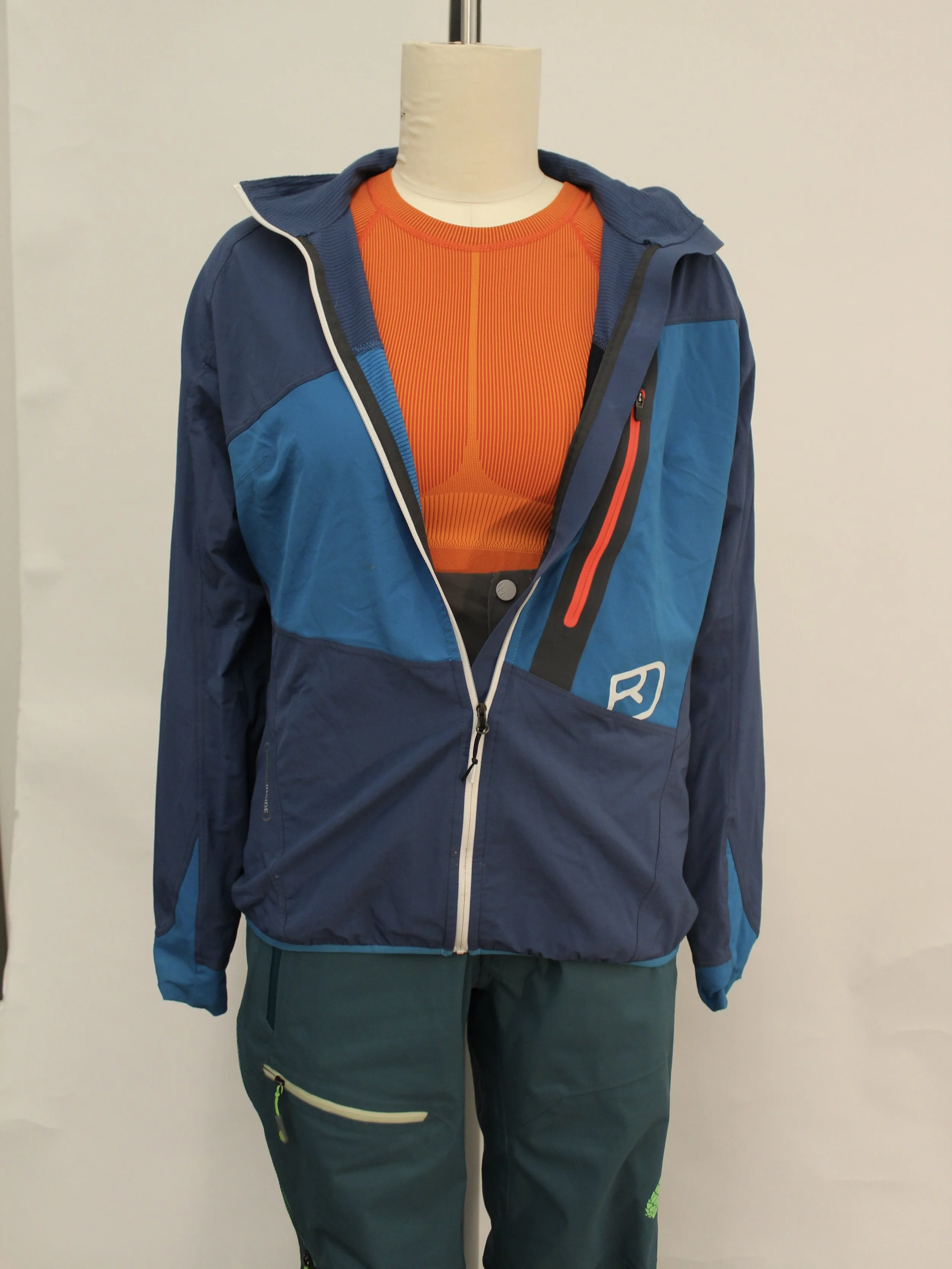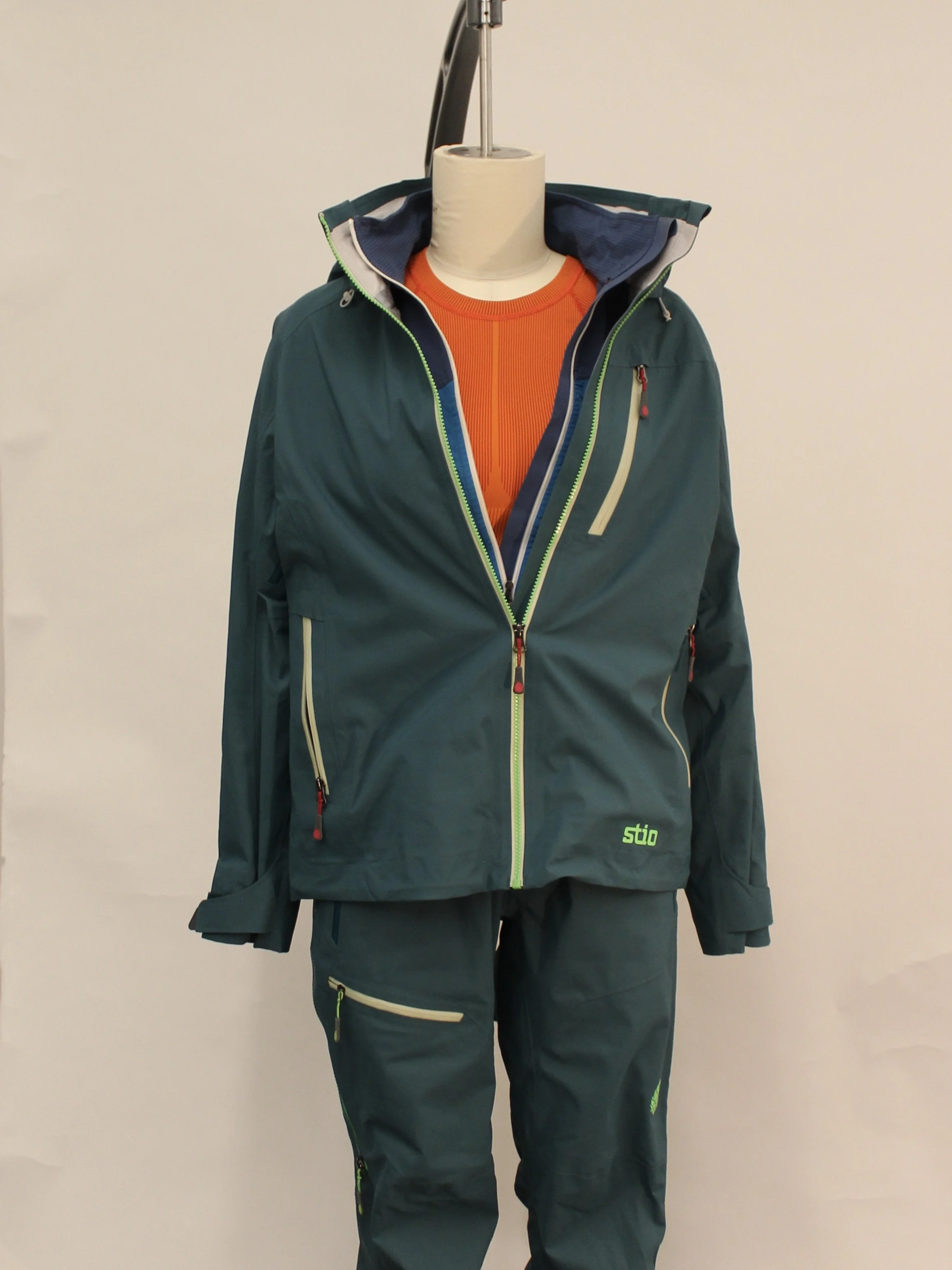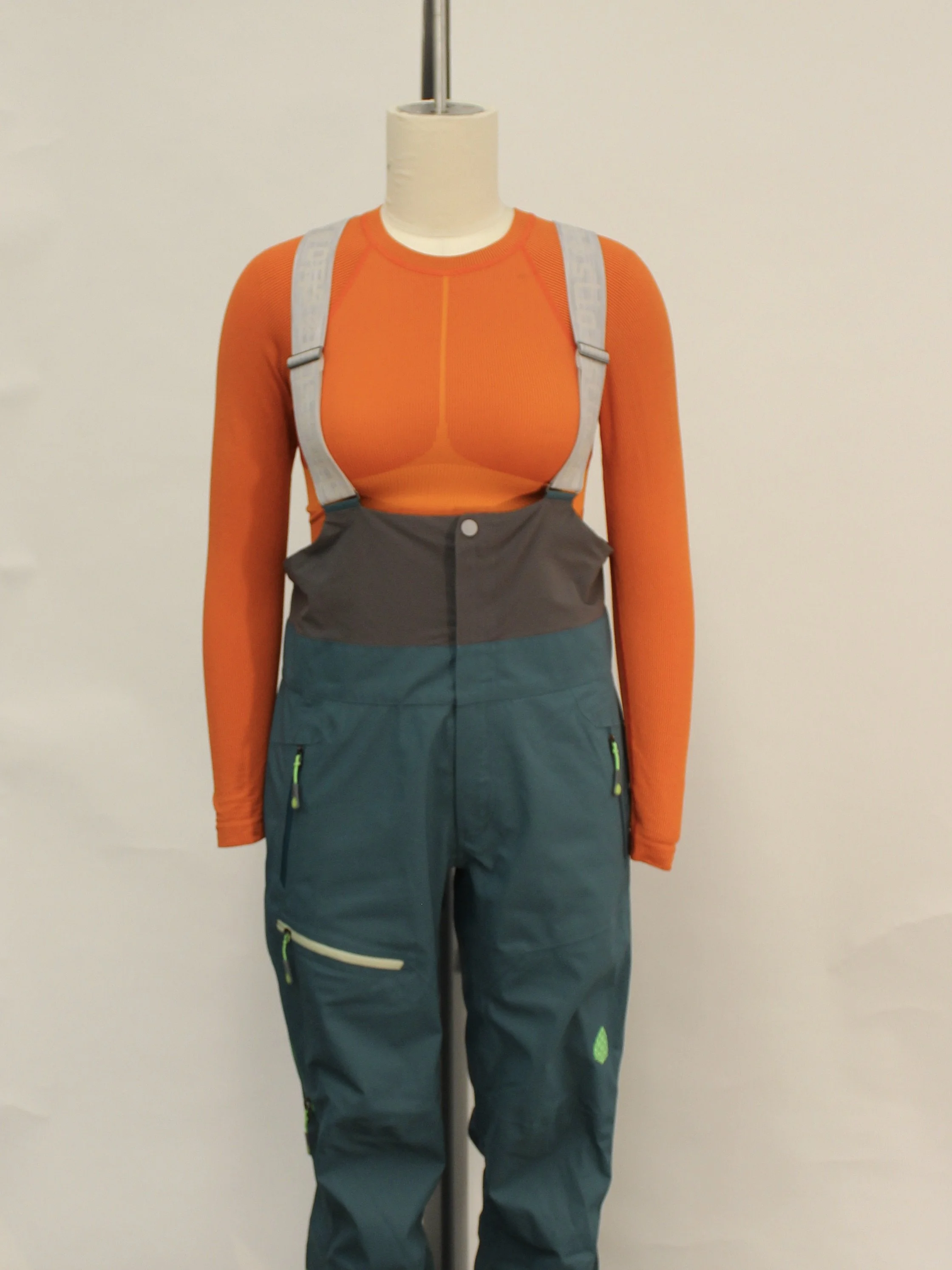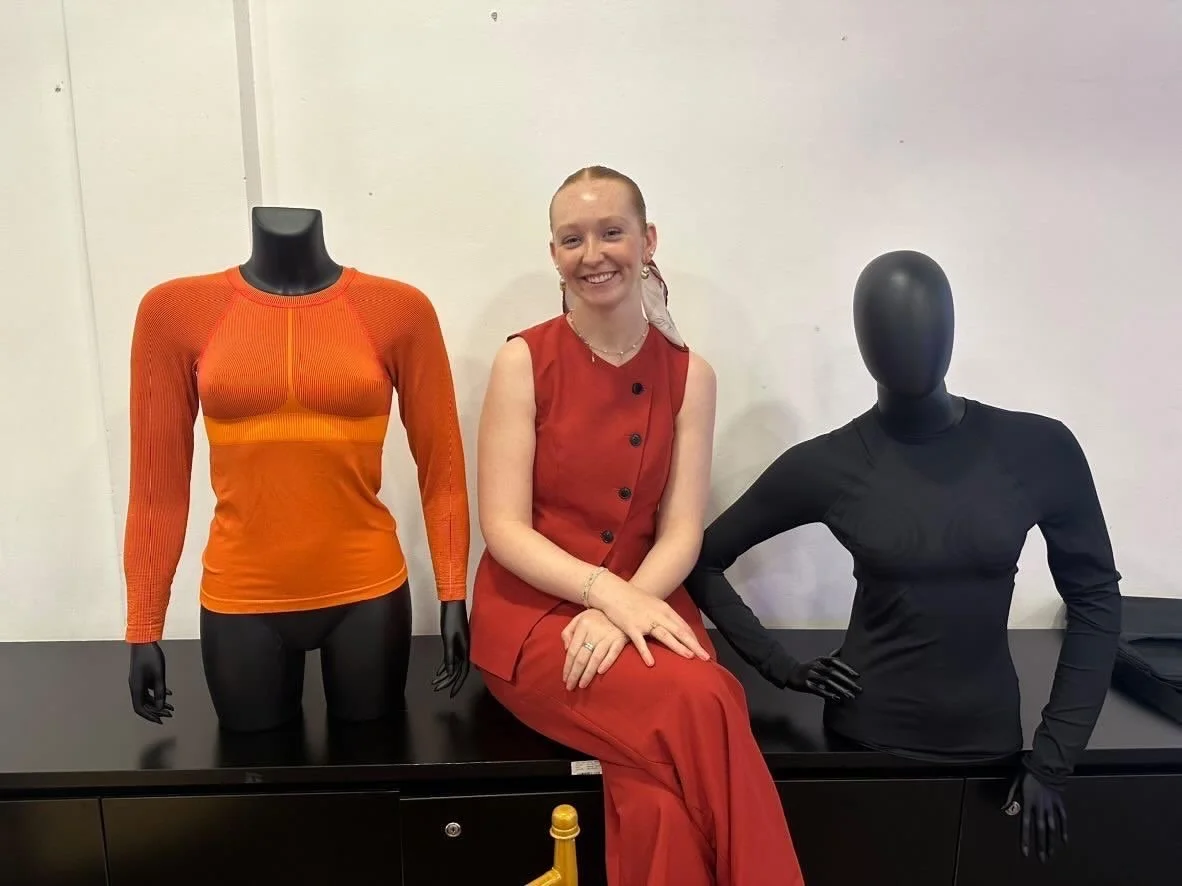

Engineered Knit.
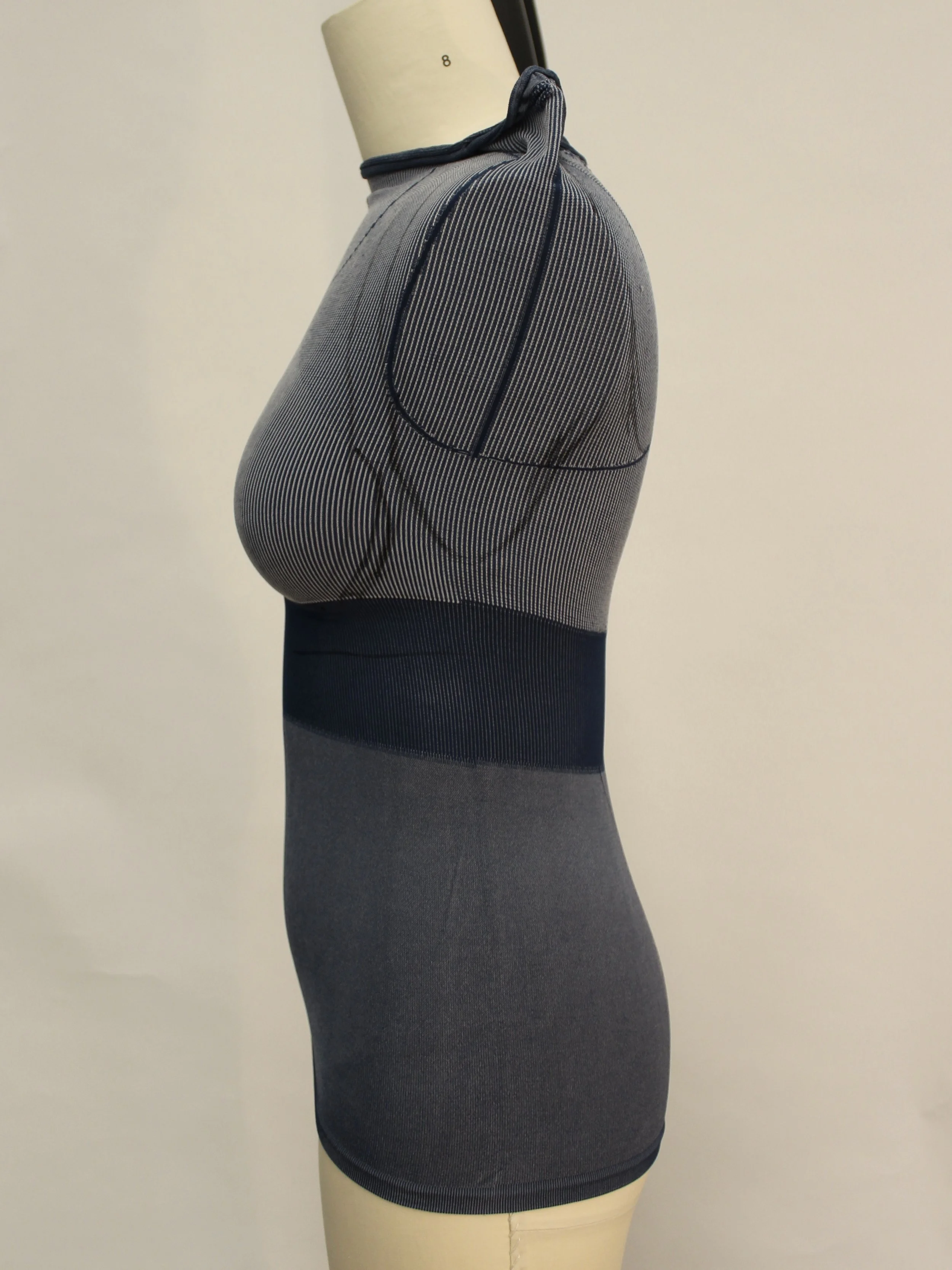
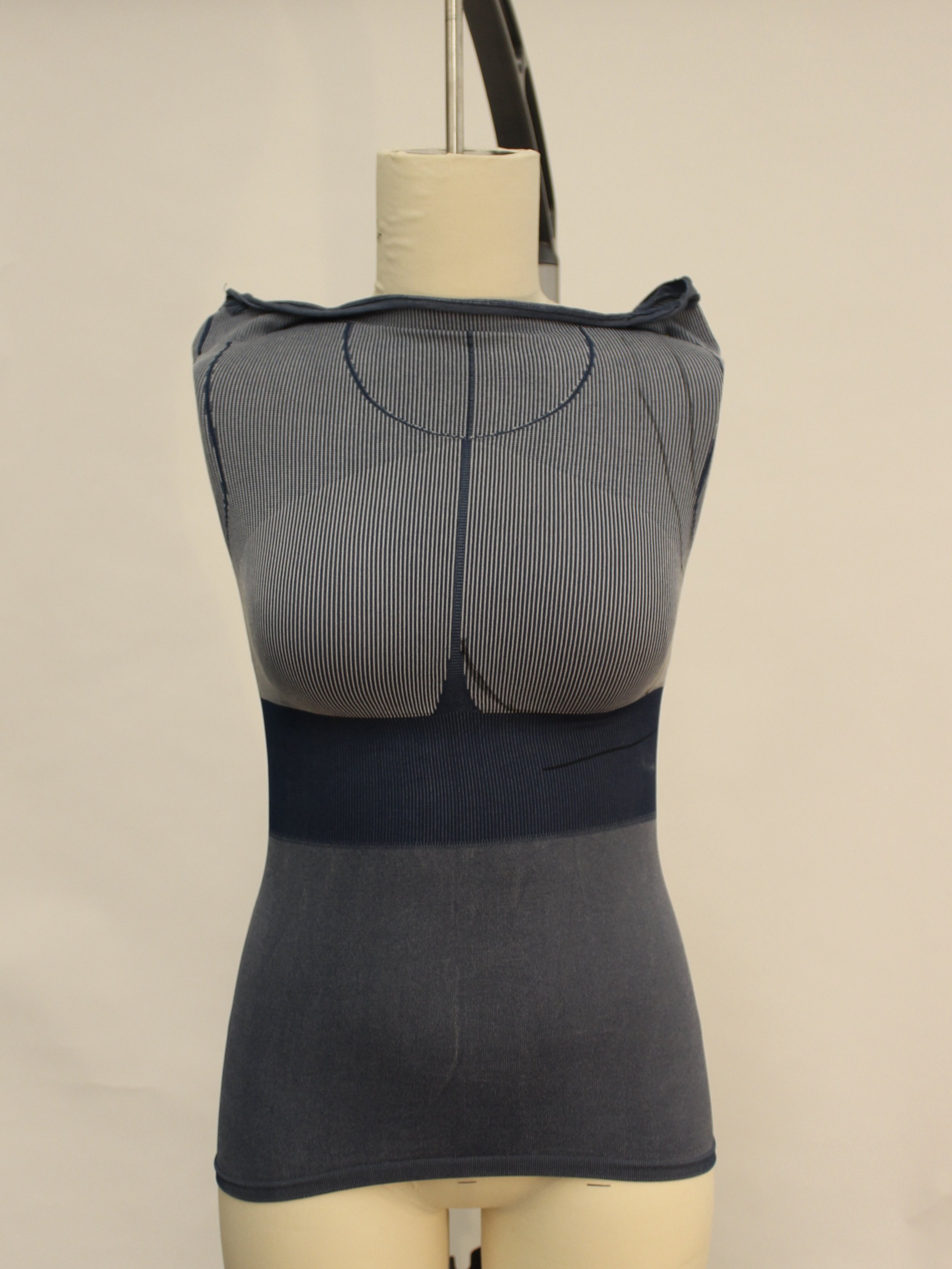
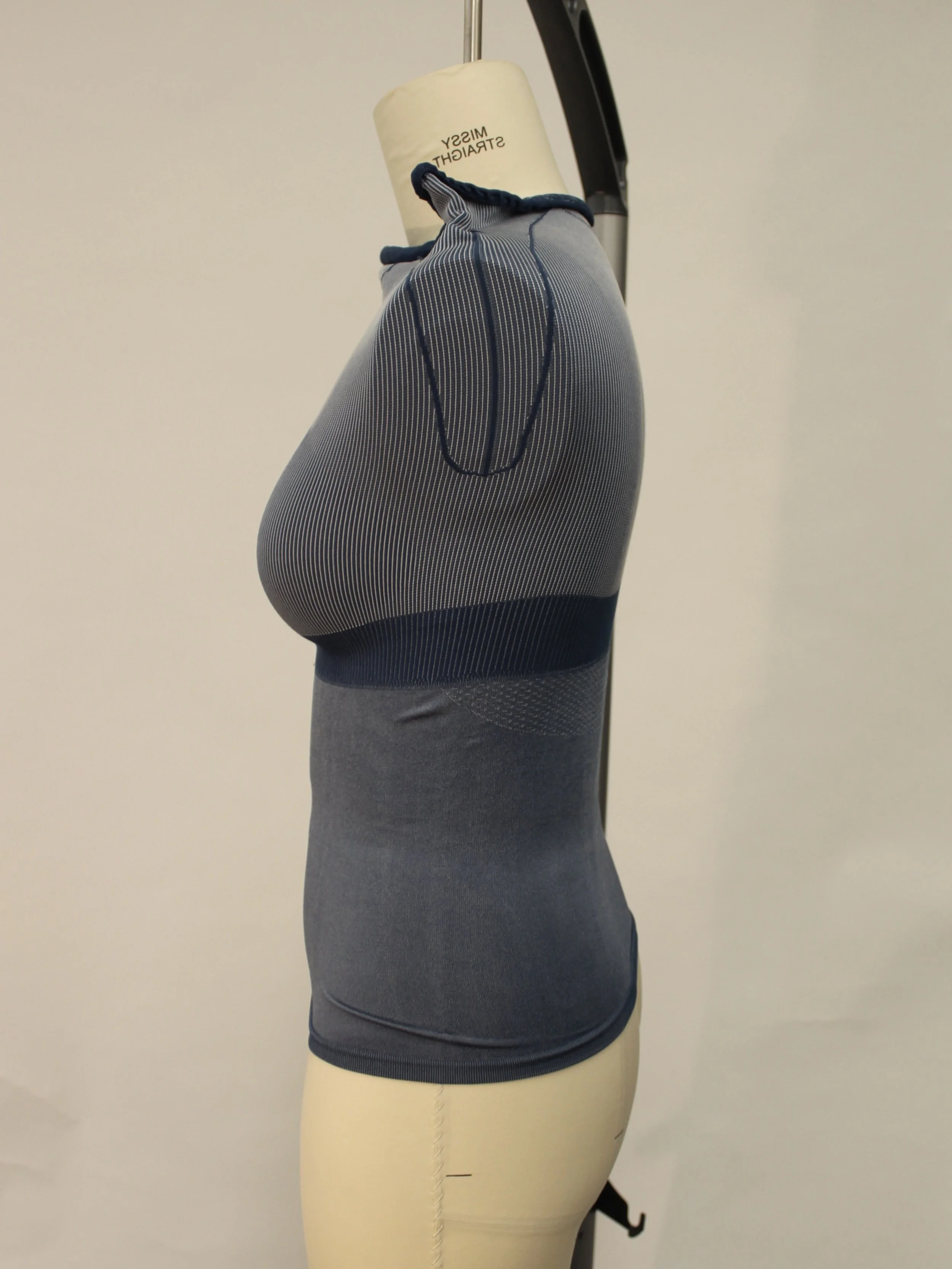
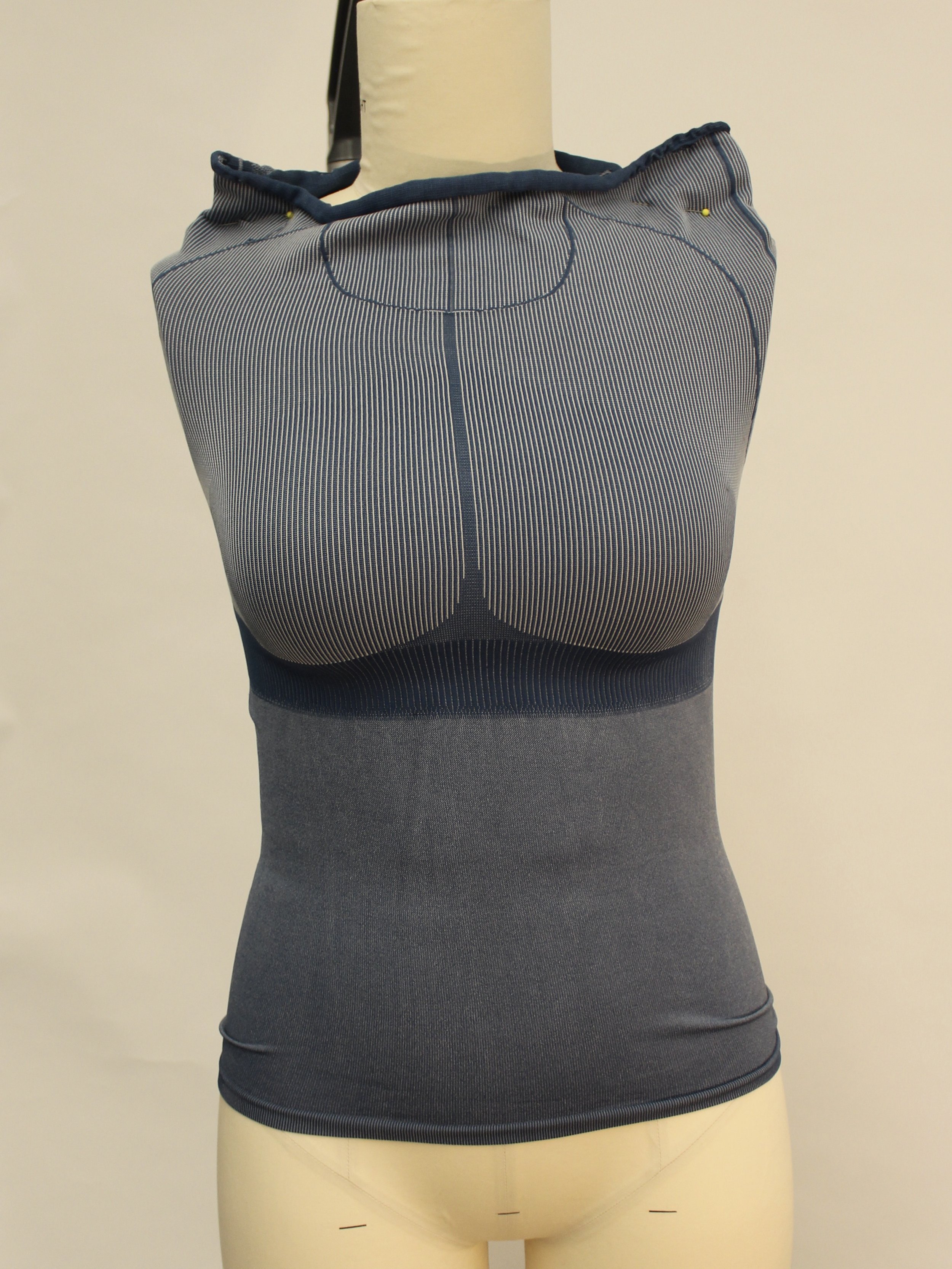
Explored engineered knit to create a base layer with an integrated bra, reducing evaporative resistance by eliminating unnecessary layers while maintaining support and thermal performance during my internship at MAS Holdings in Colombo, Sri Lanka.
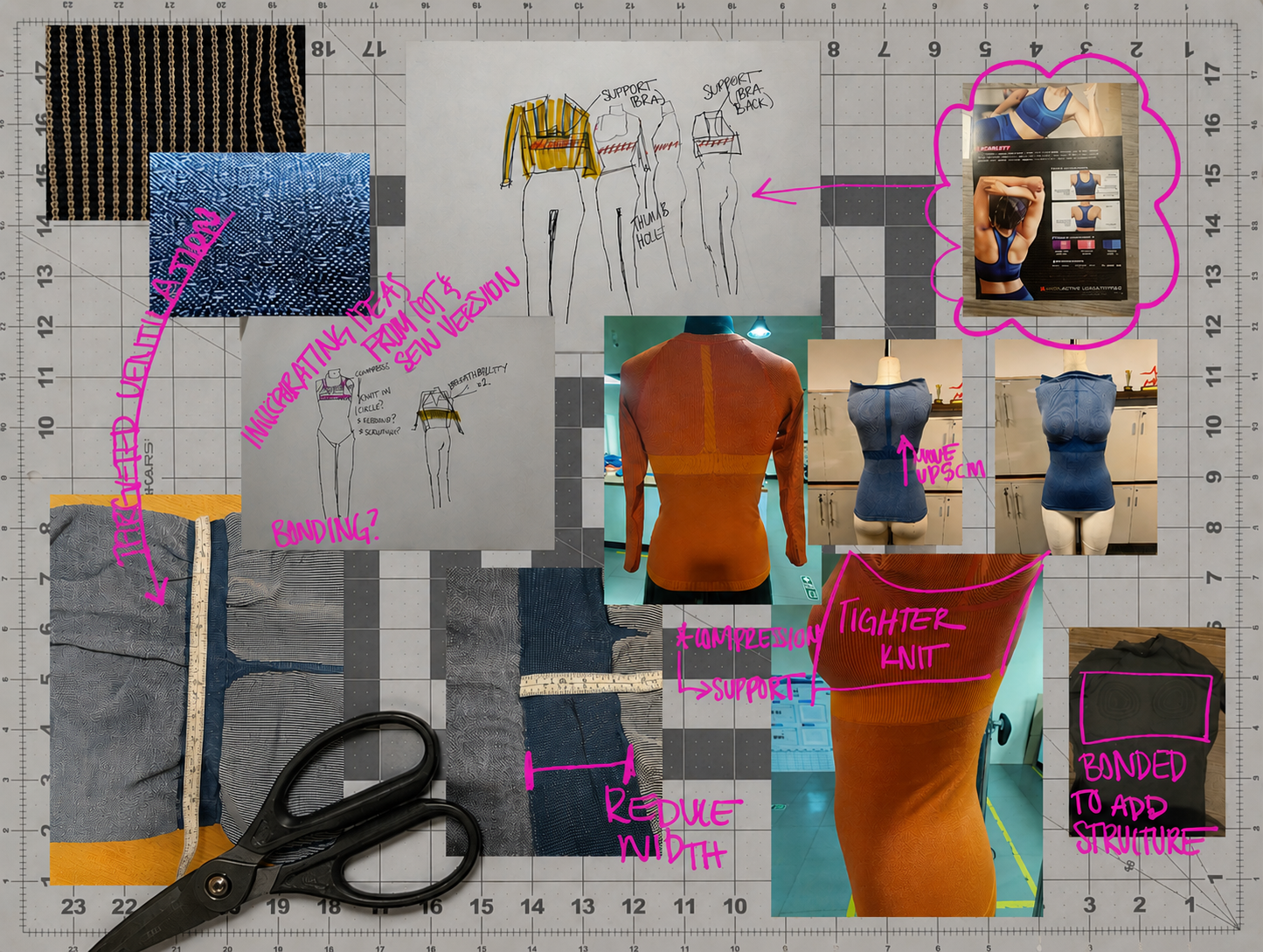
Concept Exploration
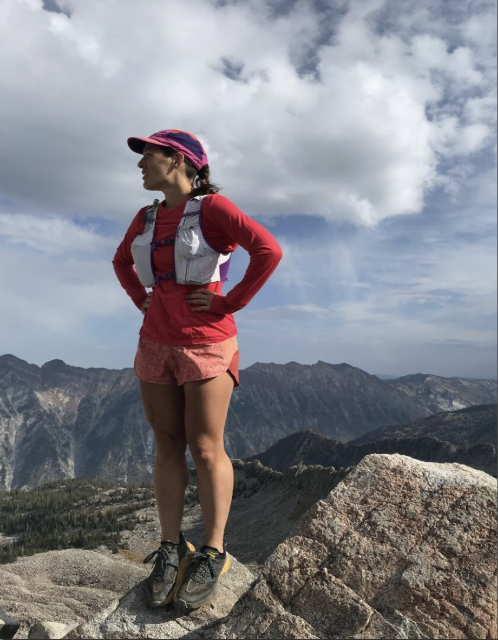
Athlete Muse
Expert Athlete : Trail Runner & Backcountry Skier
Trains year round for Boulder Summer Trail Run Series and Skimo races throughout the winter
Pain Point: Getting dangerously cold on the descent of her adventures
Emma | Age: 30 | Boulder, CO
Athlete Pain Points
68% of survey respondents reported feeling mildly, somewhat, or extremely cold during the descent of their adventure
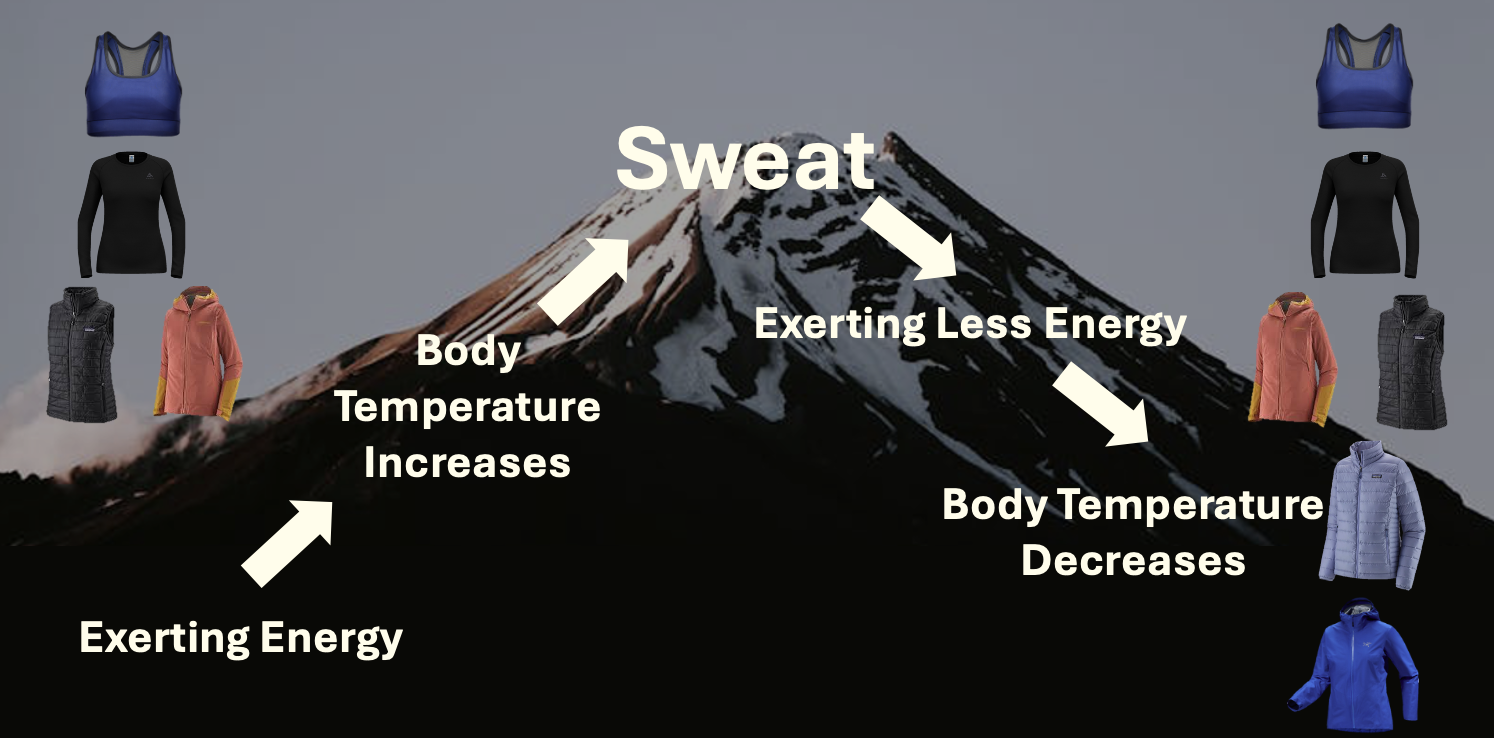
100% of survey respondents are wear a bra and a base layer during the ascent and descent of their adventure
“SWEAT IS THE ENEMY”
“I stay warm on the uphill but become quickly cold when static”
“Often times when descending, my hands and feet go numb because my core is so cold”
“I try to get down the mountain as soon as possible”
“I’m a petite woman and I run cold. I’ve been struggling to stay warm on hikes. On the way up the hike I am warm enough but I don’t get hot enough to want to shed any layers even when the hike is 3,000 feet + elevation gain. The issue with this is that on the descent I run into the cold sweat problem and get extremely cold and I don’t have any more layers to put on”
“Carry a spare base layer, ideally a grid fleece style, and swap it out with your sweaty base layer for the decent”
“It’s not super ultralight but on chilly day hikes I’ve been known to drop a hand warmer in my bra for the trip down. I find it does an incredible job of keeping me warm on the less strenuous parts of the hike, even if I’ve gotten a bit damp or sweaty.”
“Usually my hiking layering system is a wool blend base layer ie. from Smartwool, a fleece (Arc’teryx Kyanite) and then an Arc’teryx atom LT jacket on top. I wear a hat and gloves as well. Somehow I still get cold!”
“Struggling with thermal regulation hiking in the PNW”
“Try to take yout outer jacket off earlier/colder before you start to sweat. Sweat is the enemy. Seriously. You have to stay cool. Shed that outer layer BEFORE you want to”
“On the way up the hike, I stay warm, but the problem arises on the descent when I start to sweat and get extremely cold”
Athlete Performance Data
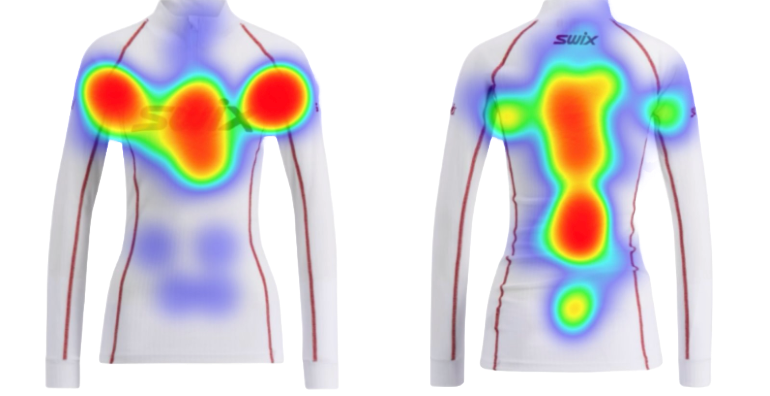
Chest
Armpits
Back
Sweat Map
Moisture is 4x more efficient at conducting temperature than air
Moisture is 24x faster conductor for temperature than air
Athlete Workarounds
1
Change into Extra Clothing
-Extra weight
-Must carry bag
-Dangerous changing in cold conditions
-More layers could get sweaty
-Increasing evaporative resistance
-Carry extra weight
2
Add Additional Layer
-Does not provide support
-Irritating to the skin
3
Wear Polyester Lace Undergarmets
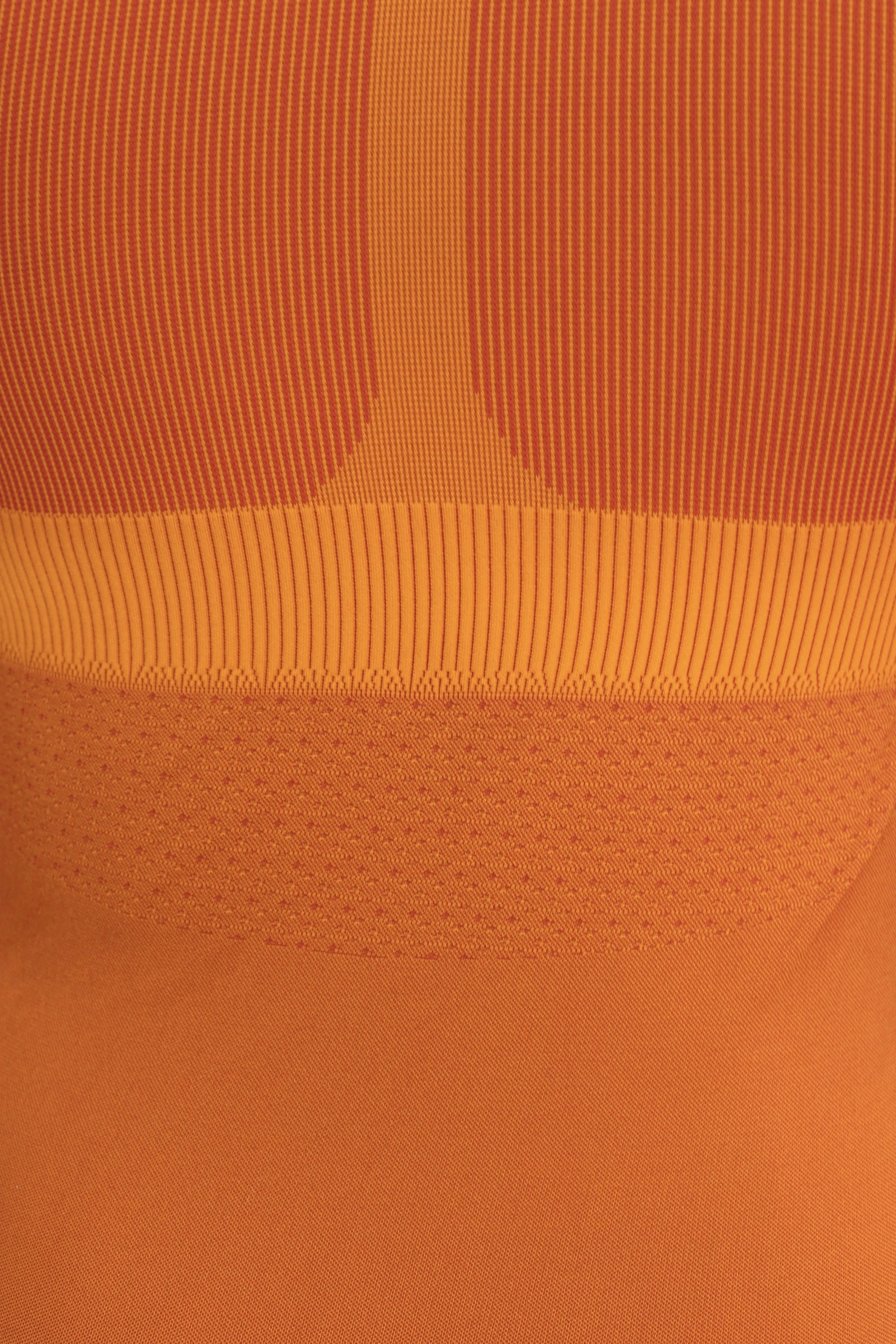
Athletes state wearing both a bra and a base layer during activities involving ascents and descents in colder temperatures, such as hiking or backcountry skiing. I wanted to approach this project in a way that hadn’t been done before, so I focused on eliminating layers to reduce evaporative resistance. My solution was to exclude the need for a separate bra layer. This base layer shirt has a built-in bra that provides the necessary support and compression for female athletes. I took my concept and developed it into circular knit and cut-and-sew options. The cut-and-sew option was an epic fail, so I chose to learn from the failure and focused on a circular knit construction to incorporate different knit structures, offering targeted support and compression while also providing ventilation in areas where the athlete sweats the most.
My Design Solution
TRIAL 1
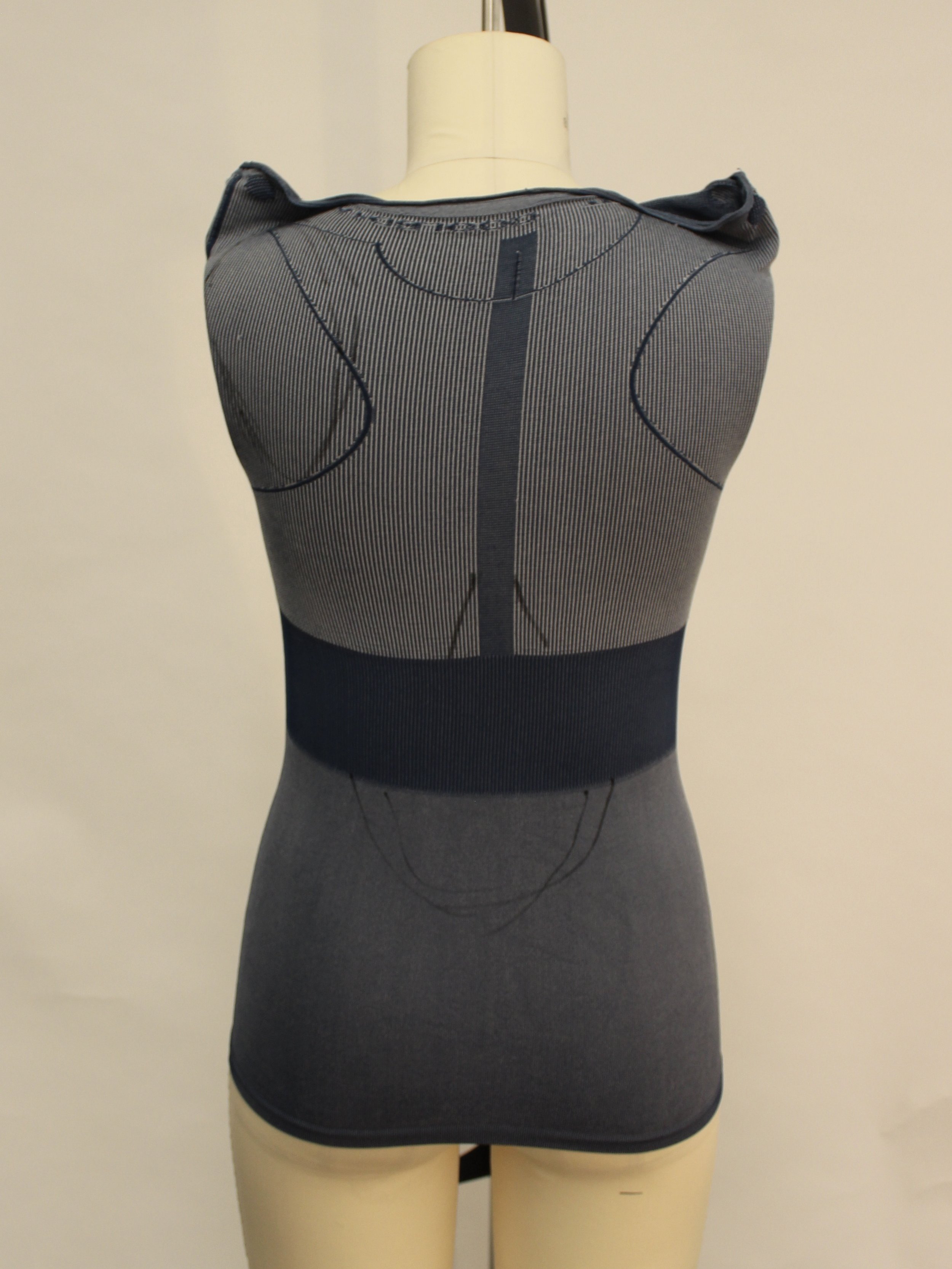
Adjusted the bra support band to improve comfort
Incorporated ventilation zones using open knit structures to improve breathability in high-perspiration areas.
Increased elastic content for better support
Engineer zonal compression using varying knit structures.
Refined the “sports bra straps” to seamlessly integrate into the shirt design
TRIAL 2
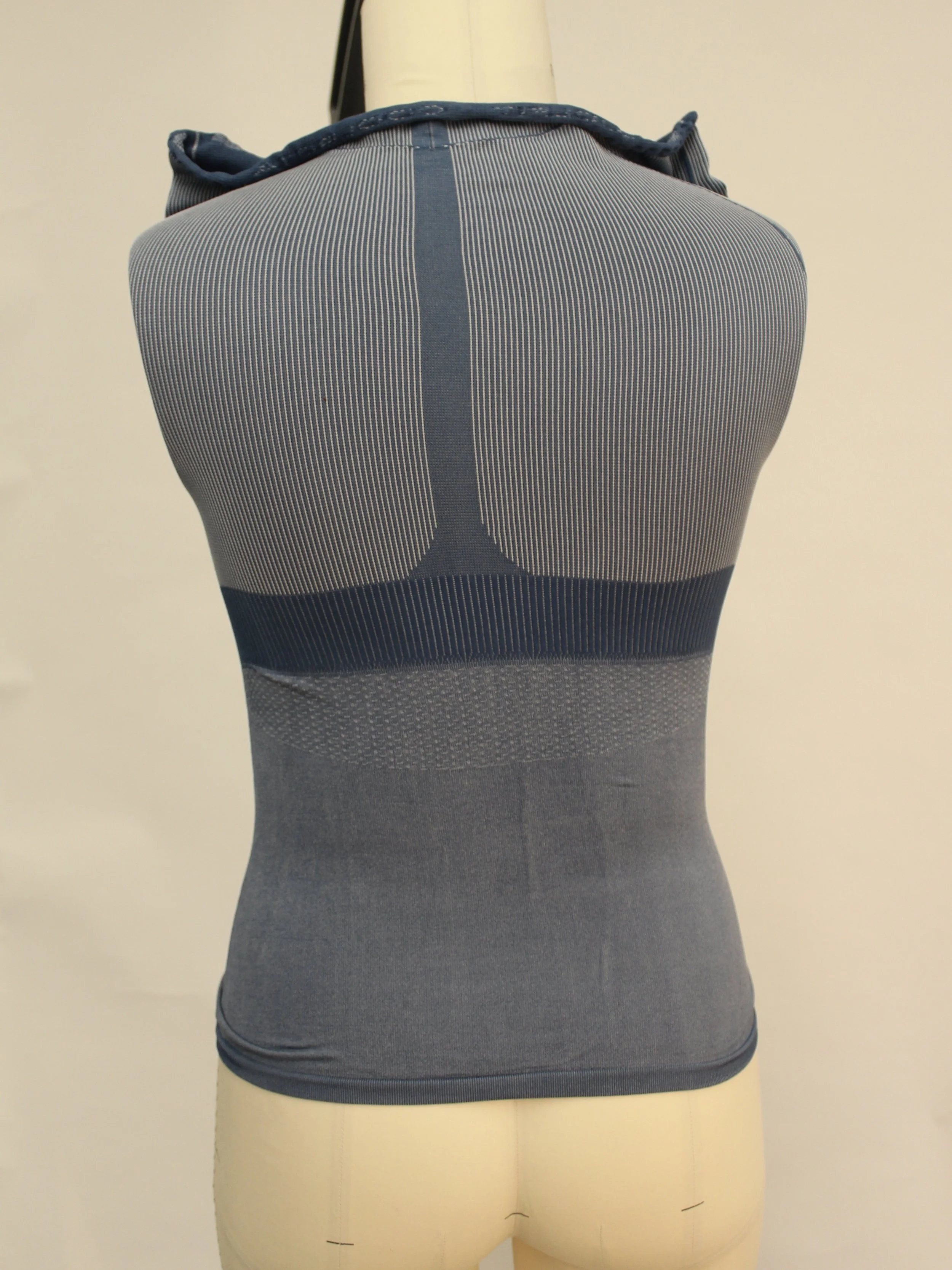
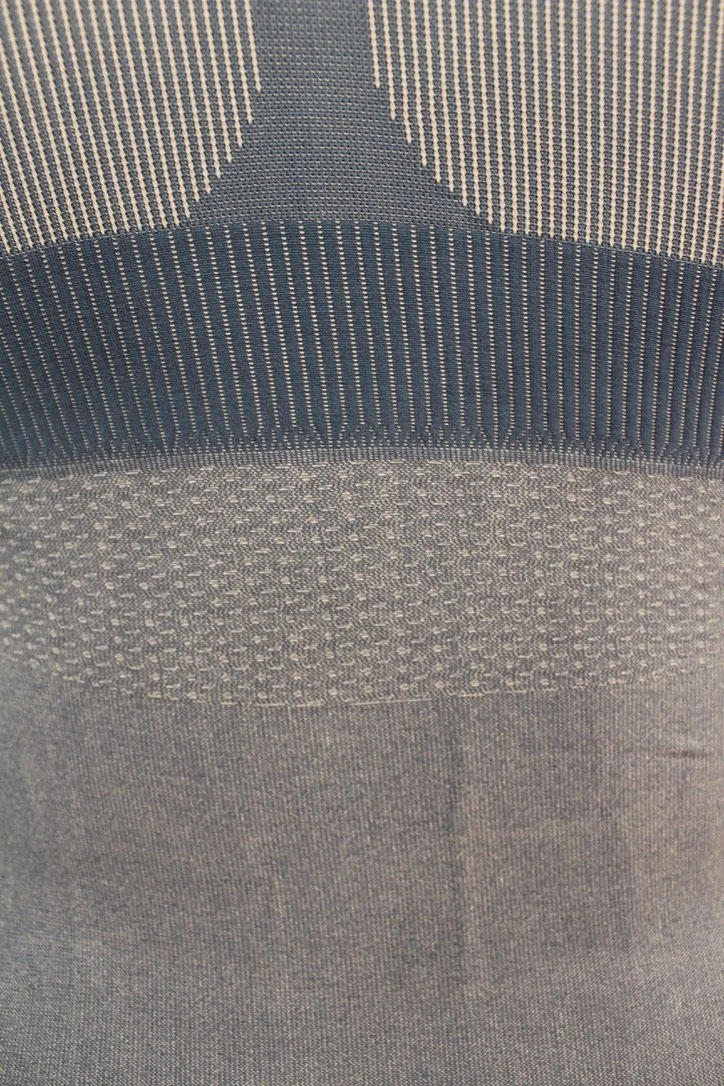
Added more elastic yarn to the band for increased support
Refined the knit structure on the hem for a more relaxed drape
PROTO 1